Week 06 Assignment +
Capacitive Angle Sensor +
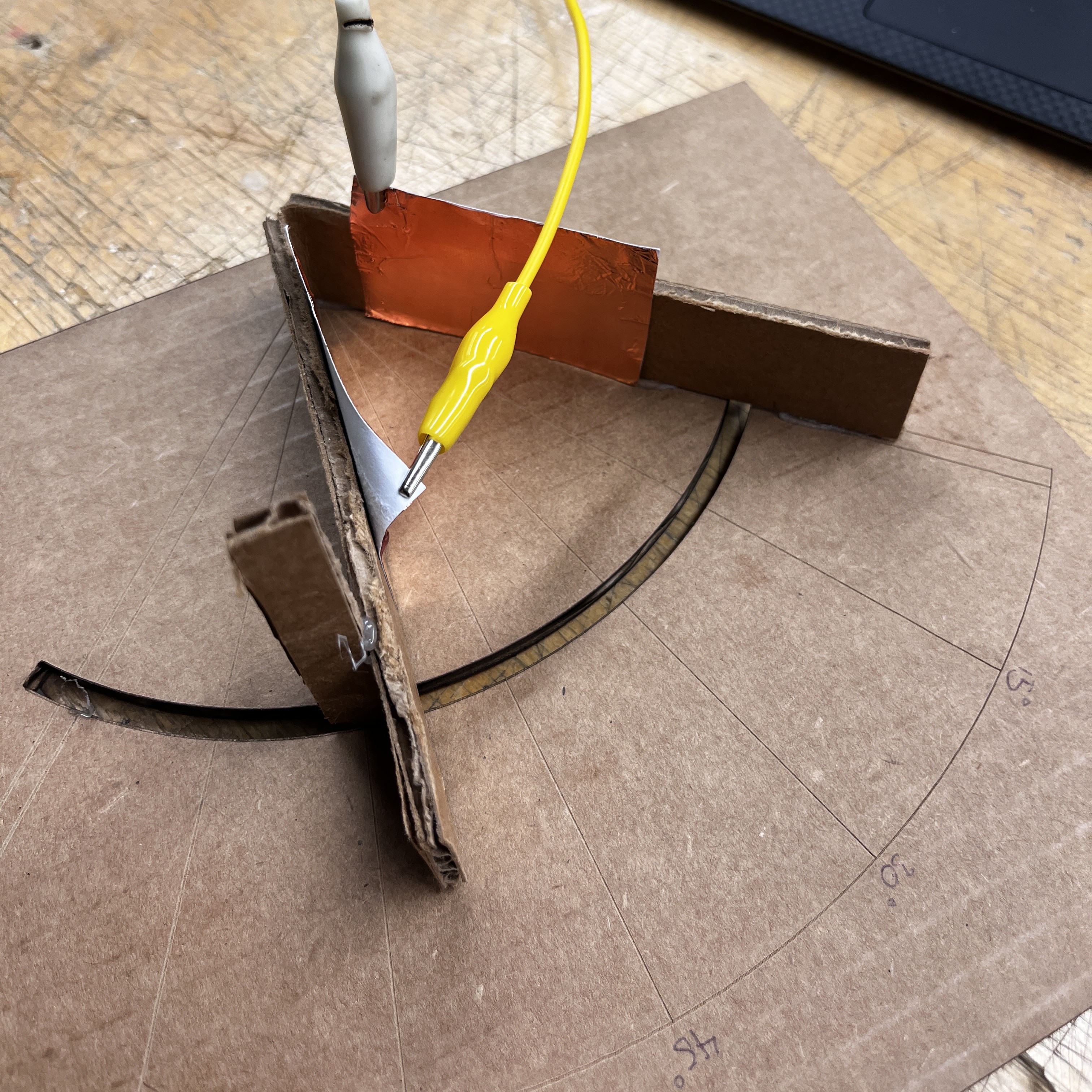
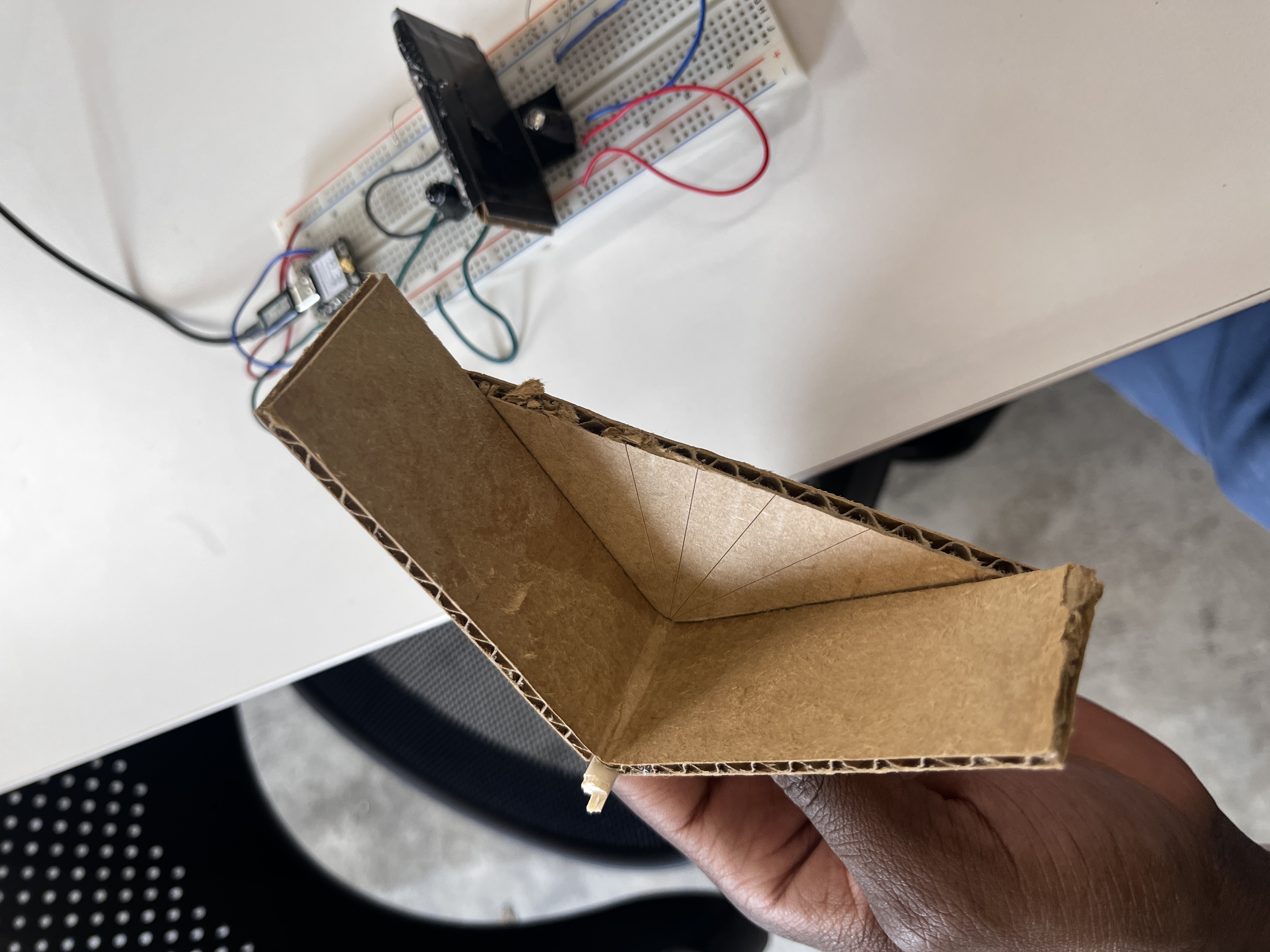
Final project will have a tilting angle
first steps towards callibrating that
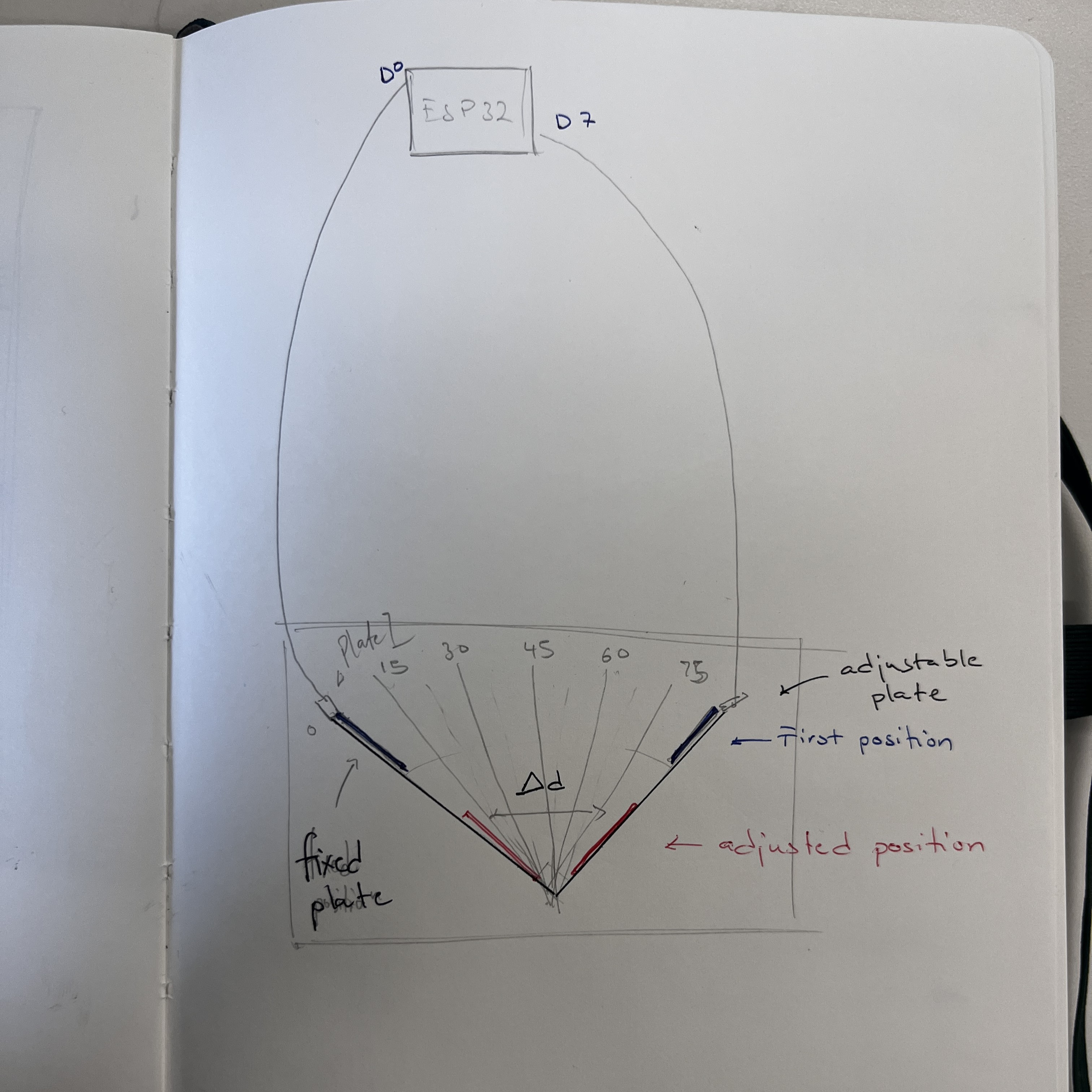
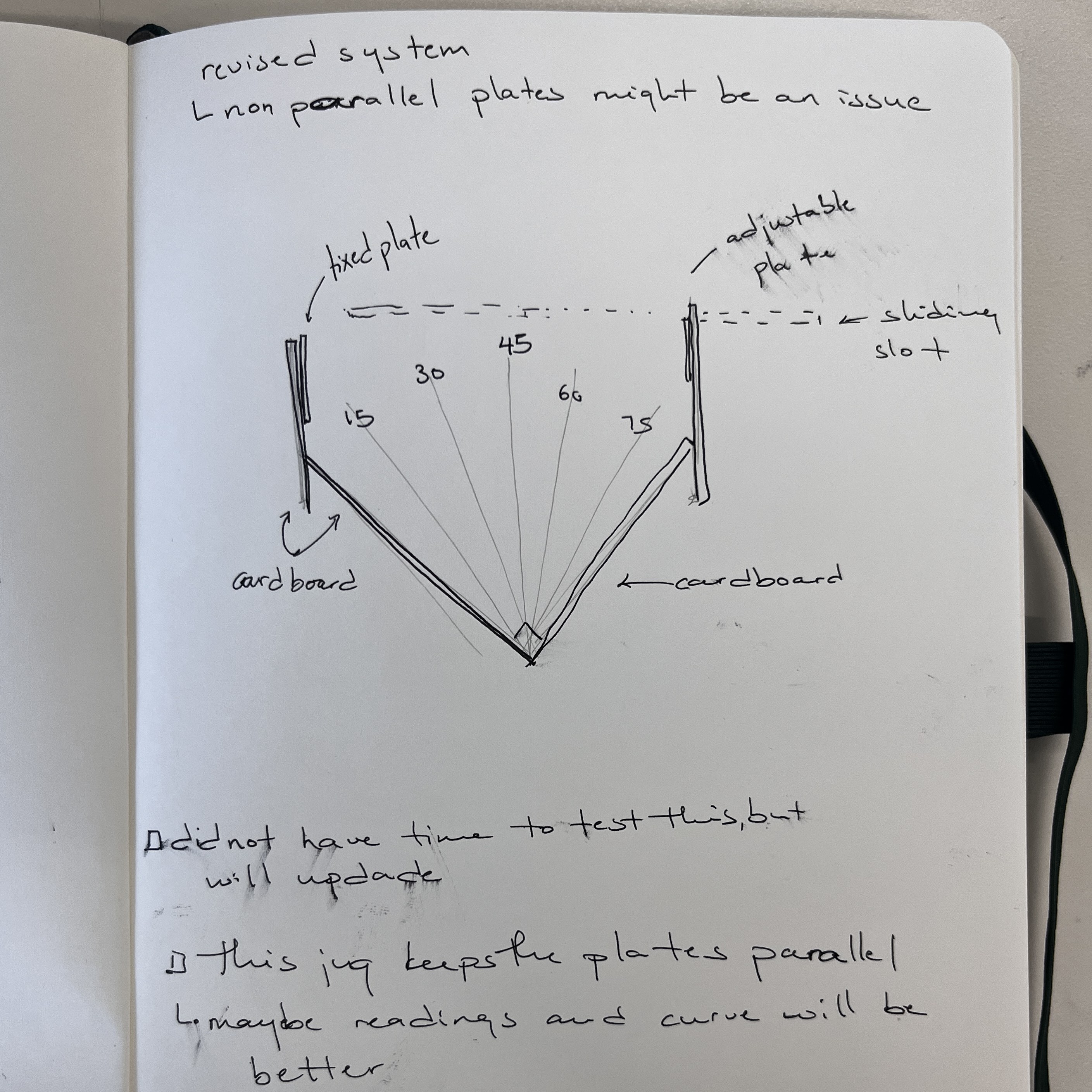
A sliding jig was made to have a precise control
Plot +
Schematics +
Measured Values +
Think that this works well for small angle measurements
But i realize now that i am changing the angle
The pararllel configuration might be better for larger angle measurements
Infrared LED and Photodiode +
Tried setting up an angle measure using this...did not work
I think there was too much noise from the environment messing up the control
Assuming it might not even be as effect as the capacitive sensor
More photos +
Schematic +
Measuring light - Photo resistor +
Plot +
Measurements and interpretation +
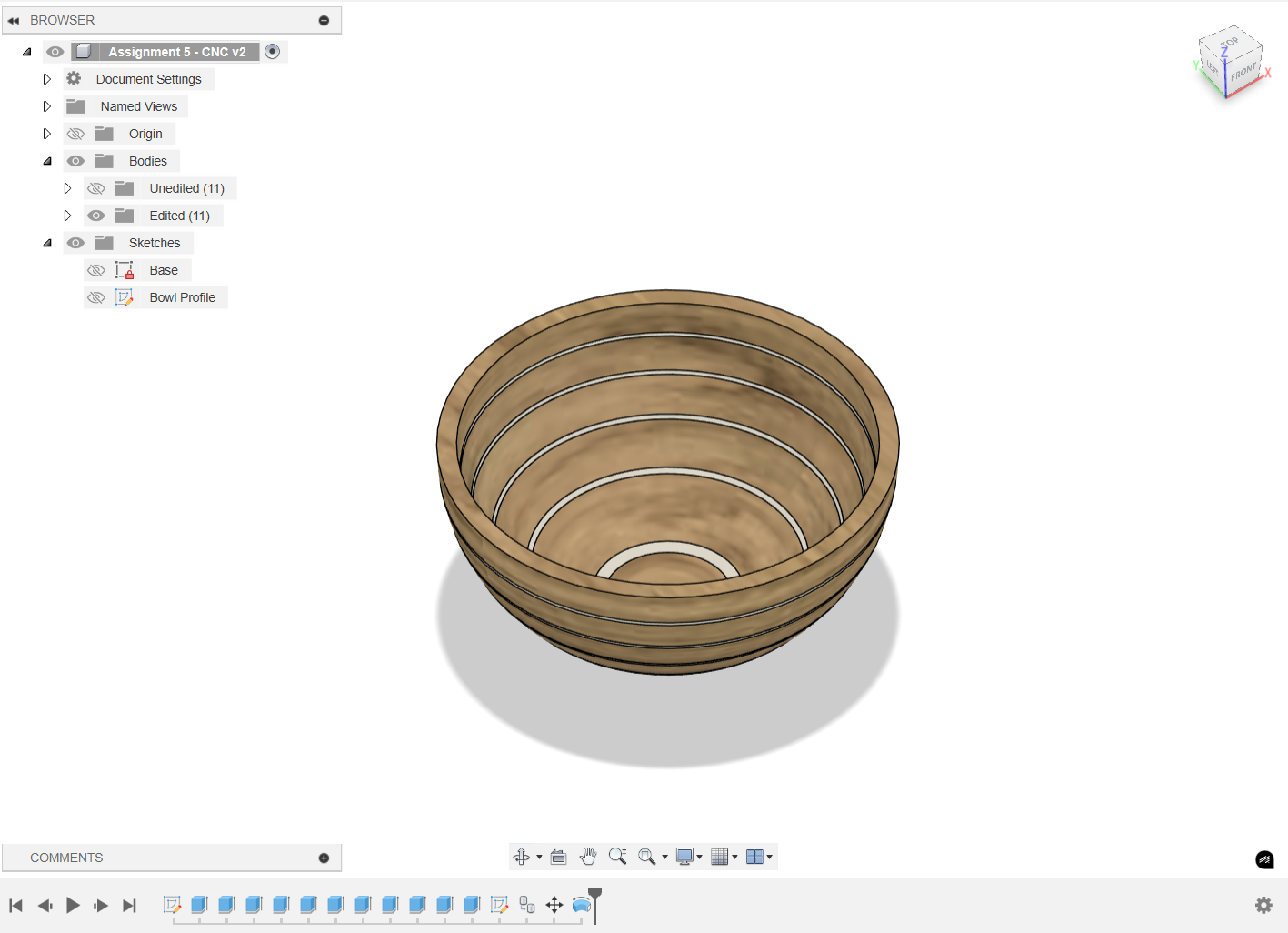
CNC File +
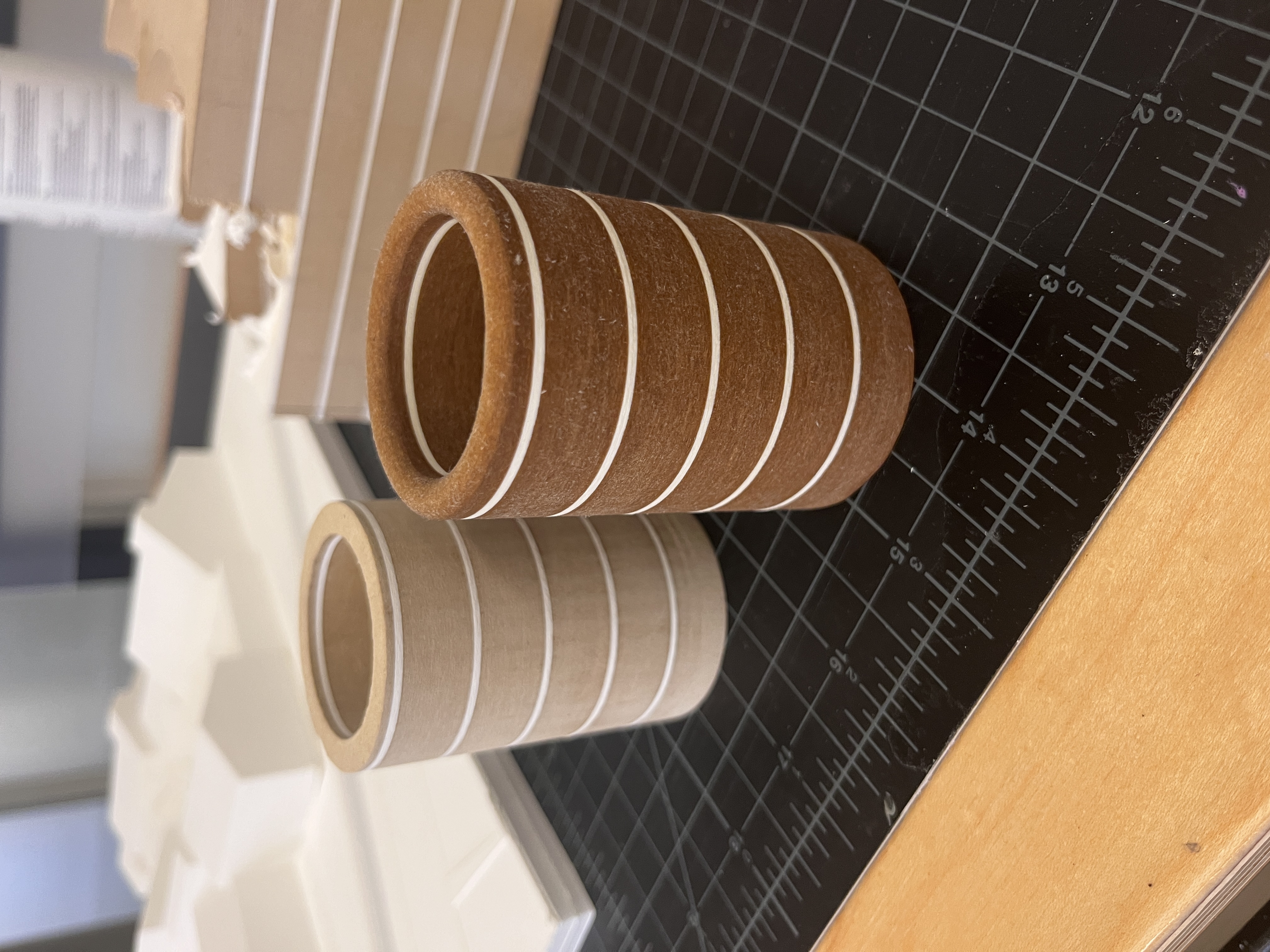
Multi material vases
Continuing an old project
Did not get to test a filp procedure to create a bowl
Test if i can do that here
If not something simpler
_ Most of the capacitance sensors focus on a parallel translation
Wanted to make an angle sensor to understand how this works with
non orthogranal changes in distance
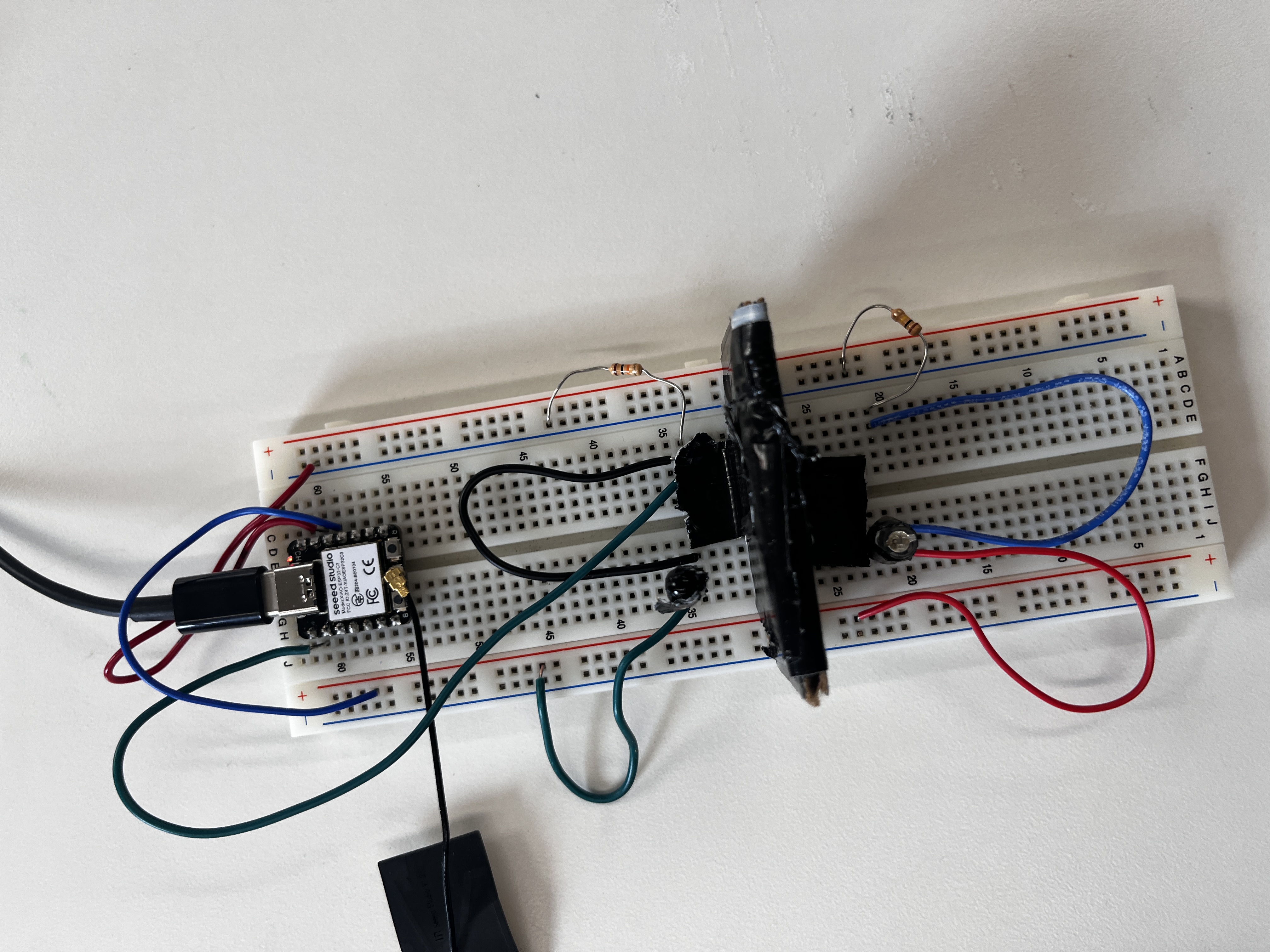
_ For secondary sensor, I wanted to build up on my microcontroller assignment
After plottin the values, I wanted to build upon the code to build more complex conditions
non orthogranal changes in distance
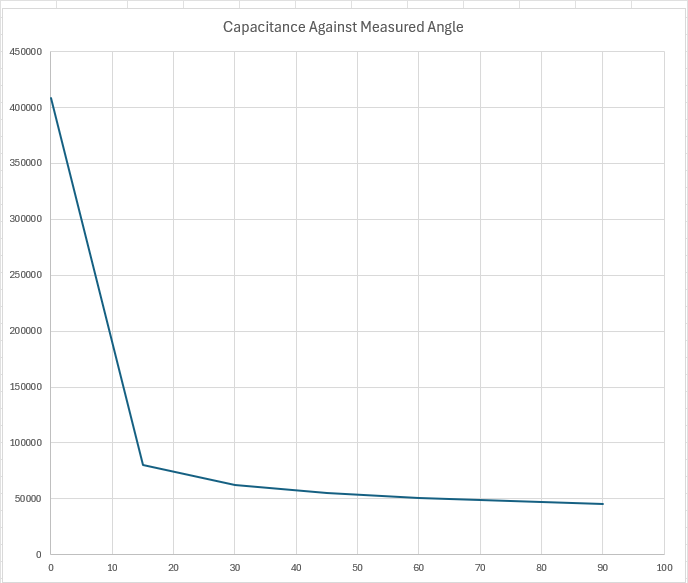
00 degrees = 409000
15 degrees = 80000
30 degrees = 62500
45 degrees = 55000
60 degrees = 50500
75 degrees = 48000
90 degrees = 45000
the threshold of 0 - 30 degrees seems to have the greatest differential in readings
A more accurate sensor might then have a series of plates 30 degrees apart, triggering each couple as you move on
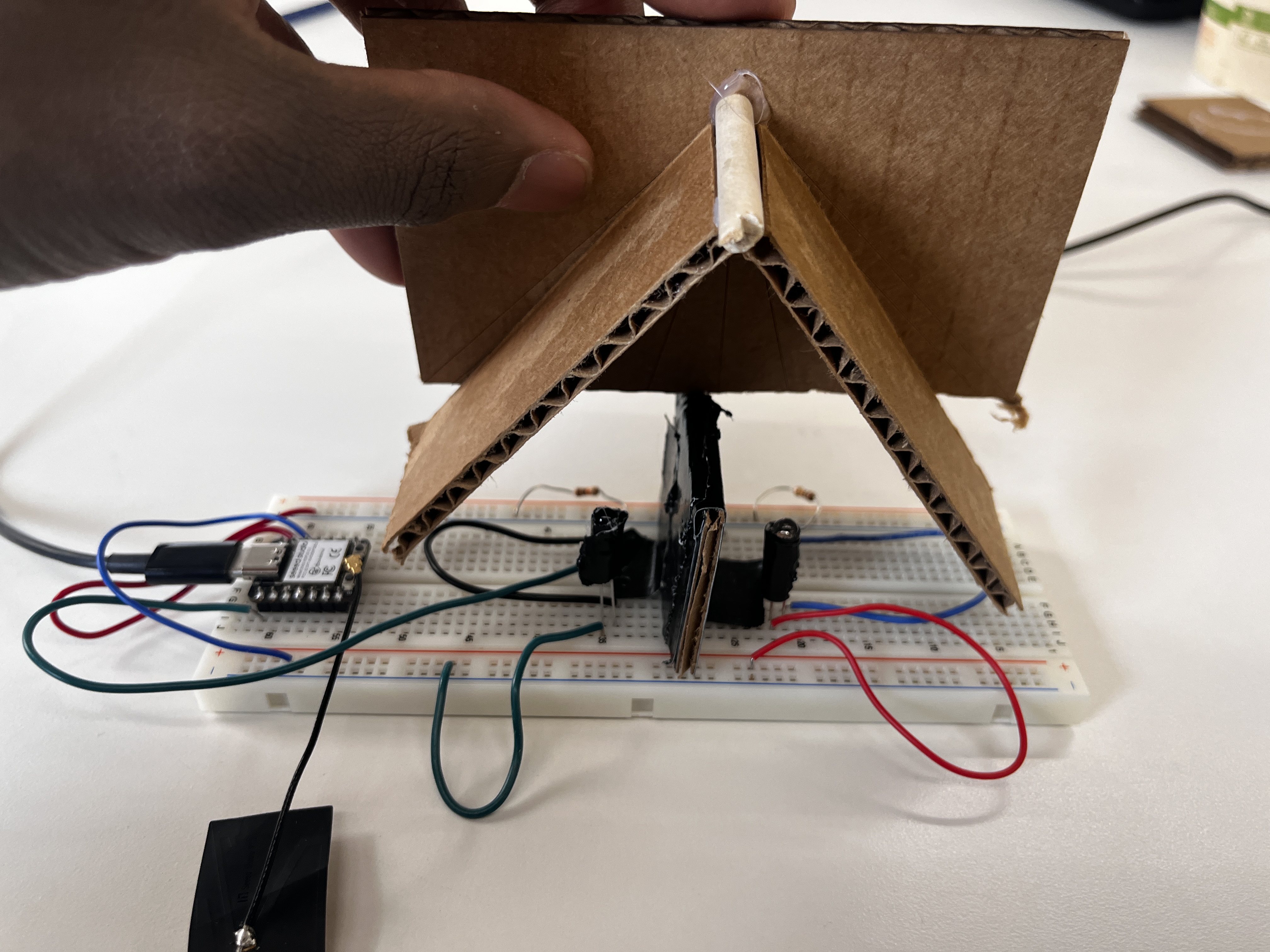
00 degrees = 409000
15 degrees = 80000
30 degrees = 62500
45 degrees = 55000
60 degrees = 50500
75 degrees = 48000
90 degrees = 45000
the threshold of 0 - 30 degrees seems to have the greatest differential in readings
A more accurate sensor might then have a series of plates 30 degrees apart, triggering each couple as you move on